Edition 01 Report
Break Into AI Engineering
One unanswered DM became a room of 2,013.
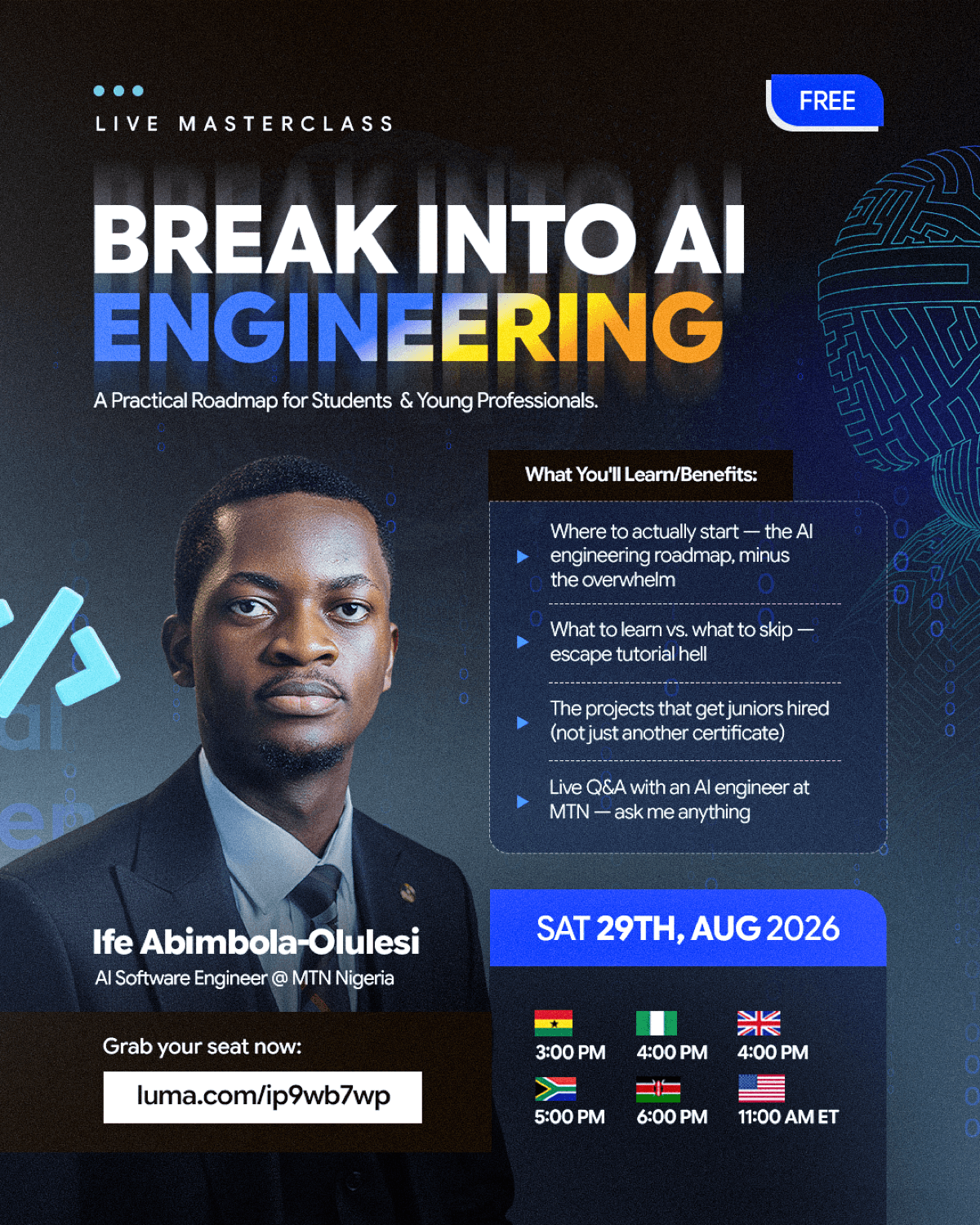
A free live masterclass on breaking into AI engineering. 2,013 people, 30 countries, three hours live.
Why it happened
It started in my DMs. One repeated question, about 19 threads, and no answer that scaled.
The message came from students and self-taught juniors, and it said some version of the same thing: can you guide me into AI engineering? I read about 19 recent threads, and almost all of them wanted a roadmap.
I could not answer everyone one by one, so I built a room to answer all of them at once. Free, live, and built around one question: how does a student or junior developer in Africa become an AI engineer, and what should they do on Monday?
I did not know if 100 people would register. I just wanted to serve.
When you step out in faith to serve, the impact can be far greater than you imagine.
The reach
2,013 registrations in six weeks, and the growth came in surges.
Registration opened on 16 July on Luma. We passed 100 in the first 36 hours. 29 July brought 289 in a single day, bigger than event day itself. The week of 20 to 26 August brought 492, our biggest, when the referral push and countdown content began.
How people found it
LinkedIn did the work. Of the 491 who told us where they heard about it, 463 said LinkedIn. Paid ads barely moved: 6 from Meta, 5 from Google. No big budget drove this room. Five years of posting on LinkedIn did.
23 people brought 215 others
In the last ten days we asked registrants to bring a friend. 215 registrations came through a personal referral, about 1 in 10 of the room, and 208 of those landed in the final 10 days. Everyone who invited at least one person received a Certificate of Appreciation.
Referrals only started in the final stretch and still produced ten percent of all sign-ups. Launched in week one, they would have compounded for six weeks instead of ten days.
Who came
Mostly Nigerian, mostly early career, and already curious.
Of the 1,879 who gave a country, 1,774 joined from Nigeria. Ghana was next with 41, and 28 more countries filled out the rest, from Uganda and Cameroon to the UK, the US, Germany, Japan and Costa Rica.
Plus 24 more: Kenya, Zimbabwe, Russia, Burundi, Canada, Costa Rica, Cyprus, Egypt, Ethiopia, Gambia, Hungary, India, Iraq, Japan, Mauritius, Pakistan, Poland, Qatar, Rwanda, Sierra Leone, South Sudan, Tanzania, Togo. 16 African, 14 outside Africa.
That matches the DMs that started all this: people who have touched code or AI tools and now want a real path in.
The session
Three hours live. We had planned two.
Welcome
What you will leave with.
How I got here
The honest version: university, the plywood desk, the jobs in between, and how I ended up building production AI systems at MTN.
The intelligence workforce
Who actually works in AI. Three layers: training, integration and application. AI engineering sits in integration, a different job from ML engineering.
Which layer are you?
A live exercise.
A word from our partner, Winumu
Why proof of work beats certificates.
Breaking into AI engineering
A five-step roadmap. Every step ends with one thing to start on Monday.
Under the hood
A live demo of Abeg, an AI app I built for the session.
Going deeper
The Starter Kit.
Open Q and A
In the room
They stayed, and they talked.
Peak of 266 watching at once, about 30 minutes in. An average of 182 concurrent across the full three hours. Around 100 were still there at the three-hour mark, deep into Q and A, with 2,122 chat messages and 4,653 reactions along the way.
Approximated from the YouTube Studio concurrent-viewer graph. Peak and average are exact. The two biggest bursts of chat and reactions came at about 9 minutes and about 68 minutes in.
What was on screen at four of those minutes
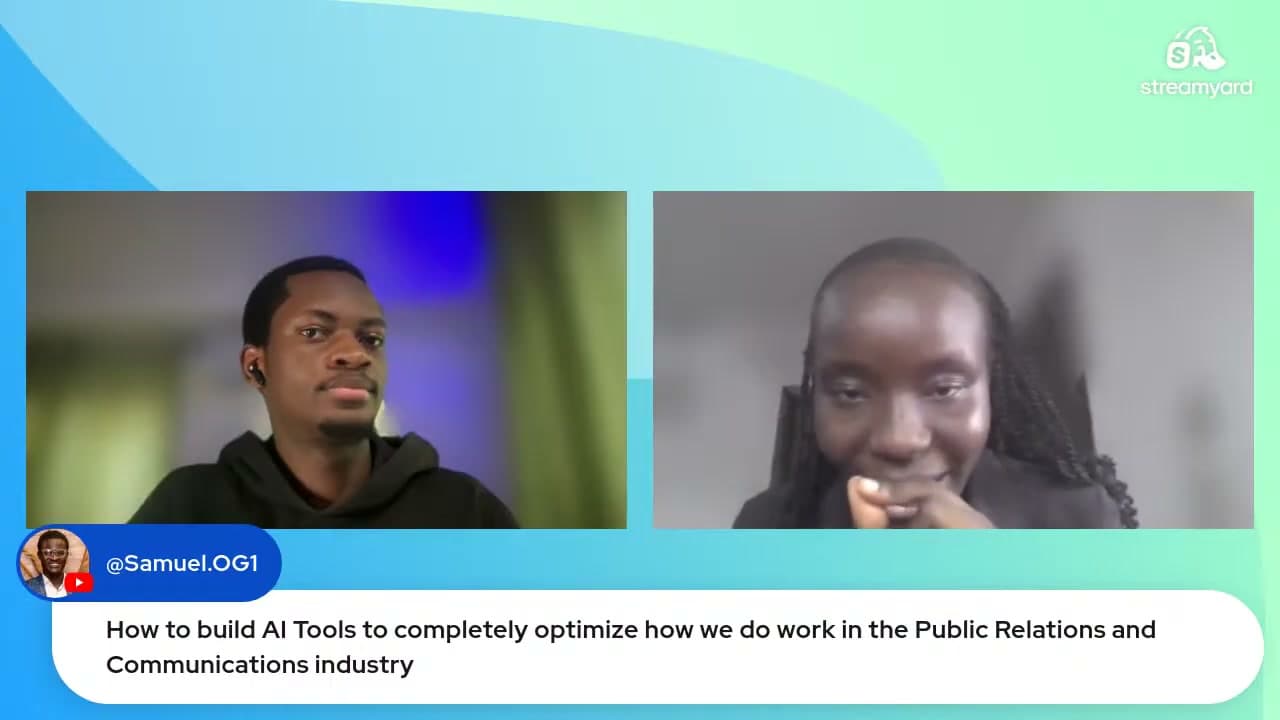
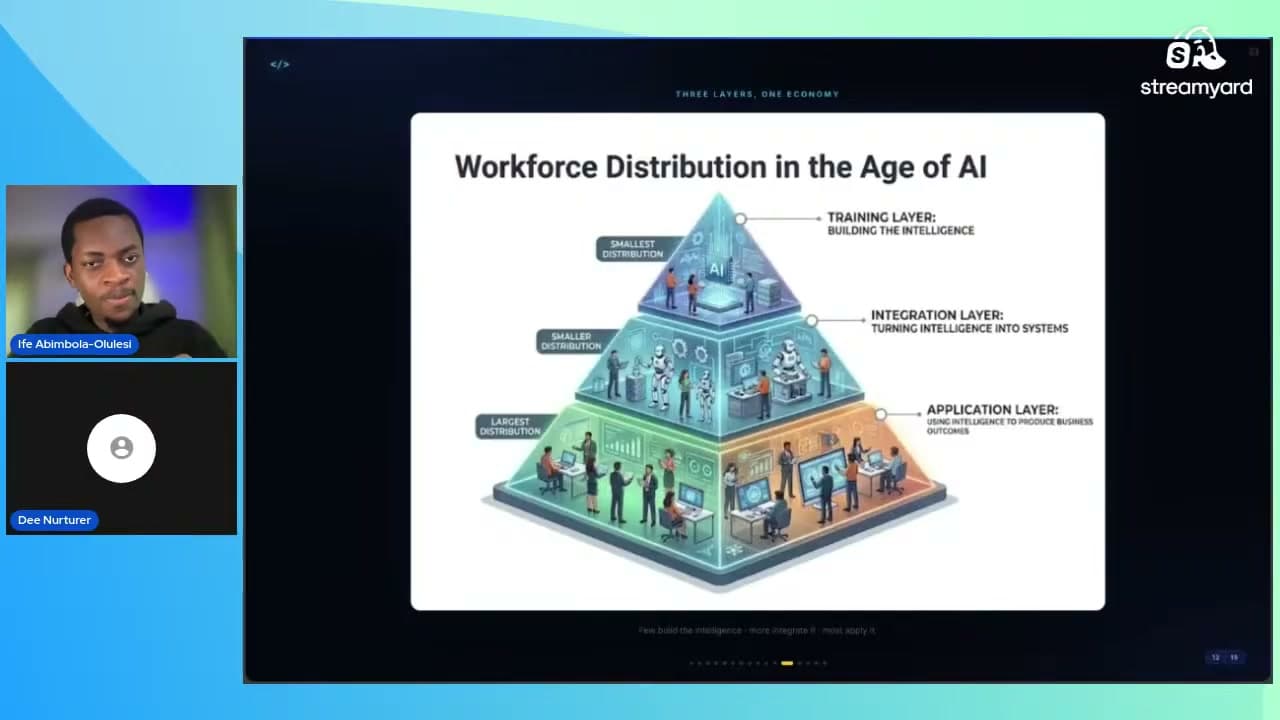
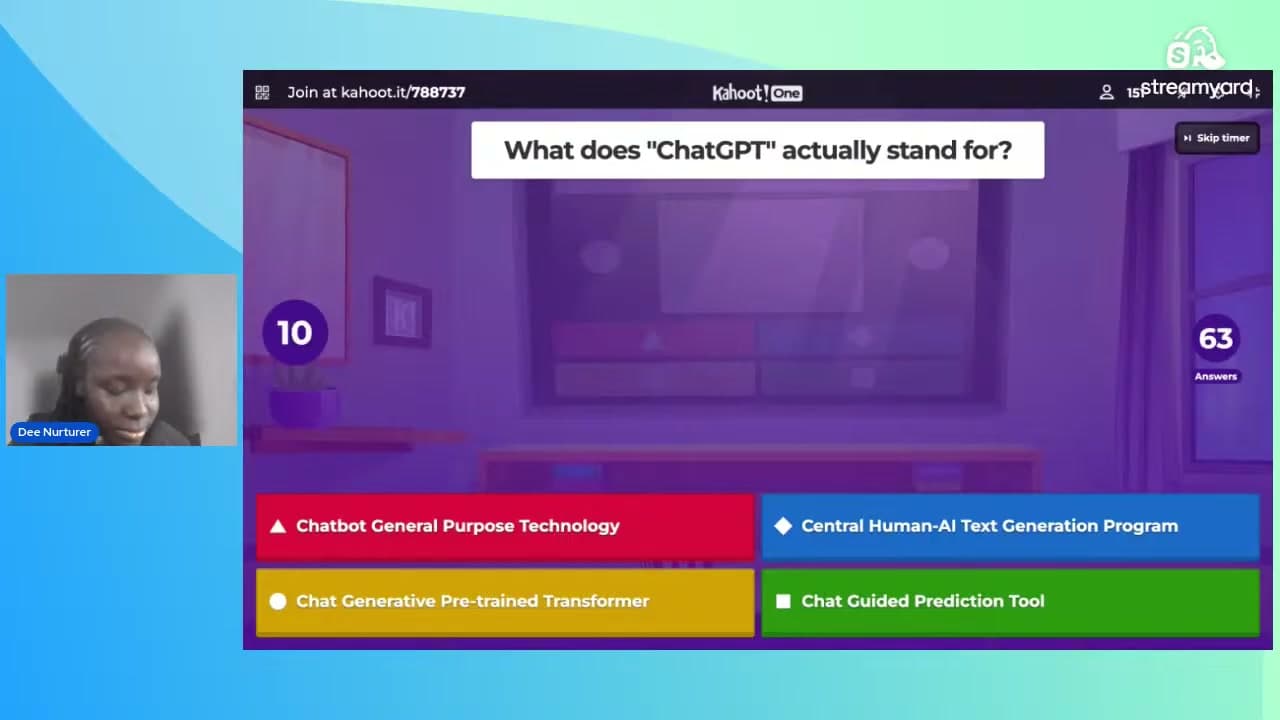
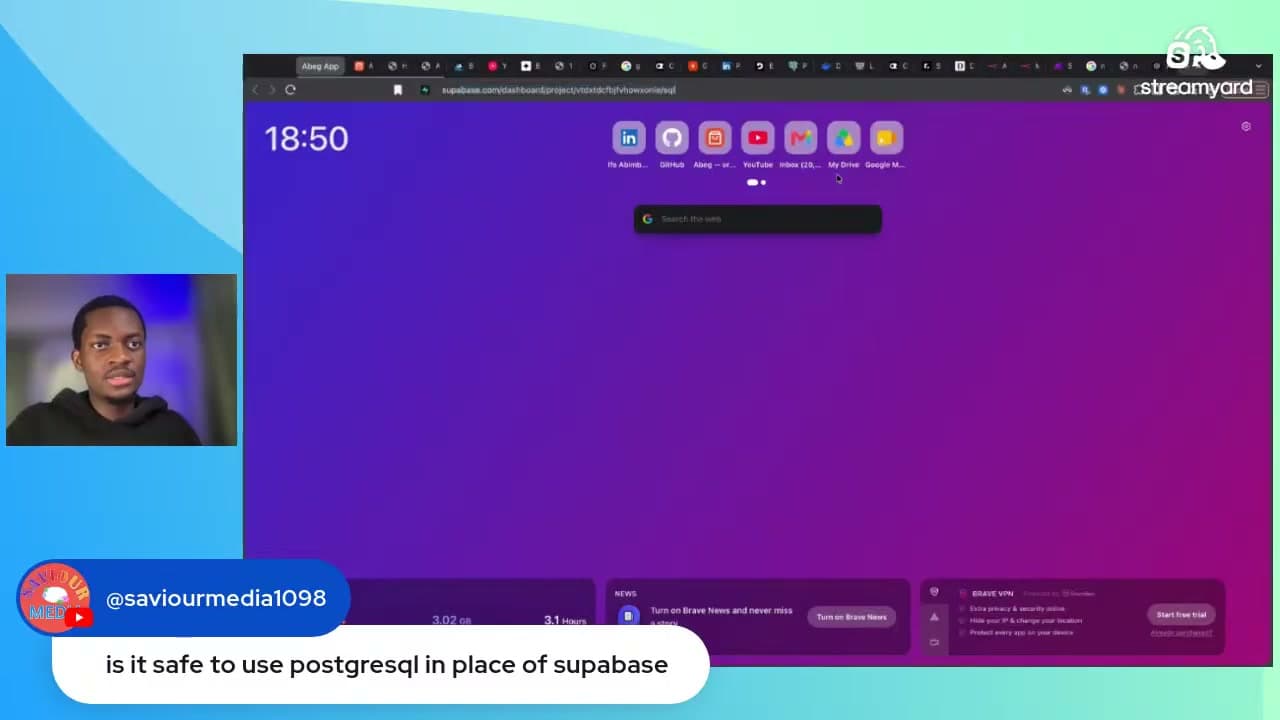
What about show-up rate? We will not make one up. YouTube reports concurrent viewers, not unique joins. Peak (266) divided by registrations (2,013) is 13 percent, and that is the floor, because people came and went across three hours. For Edition 2 we will use tracked join links and report true attendance.
1,124 views and 572.8 hours of watch time. The channel gained 135 subscribers.
What got built
A live demo became an open source product. Then a stranger made it better.
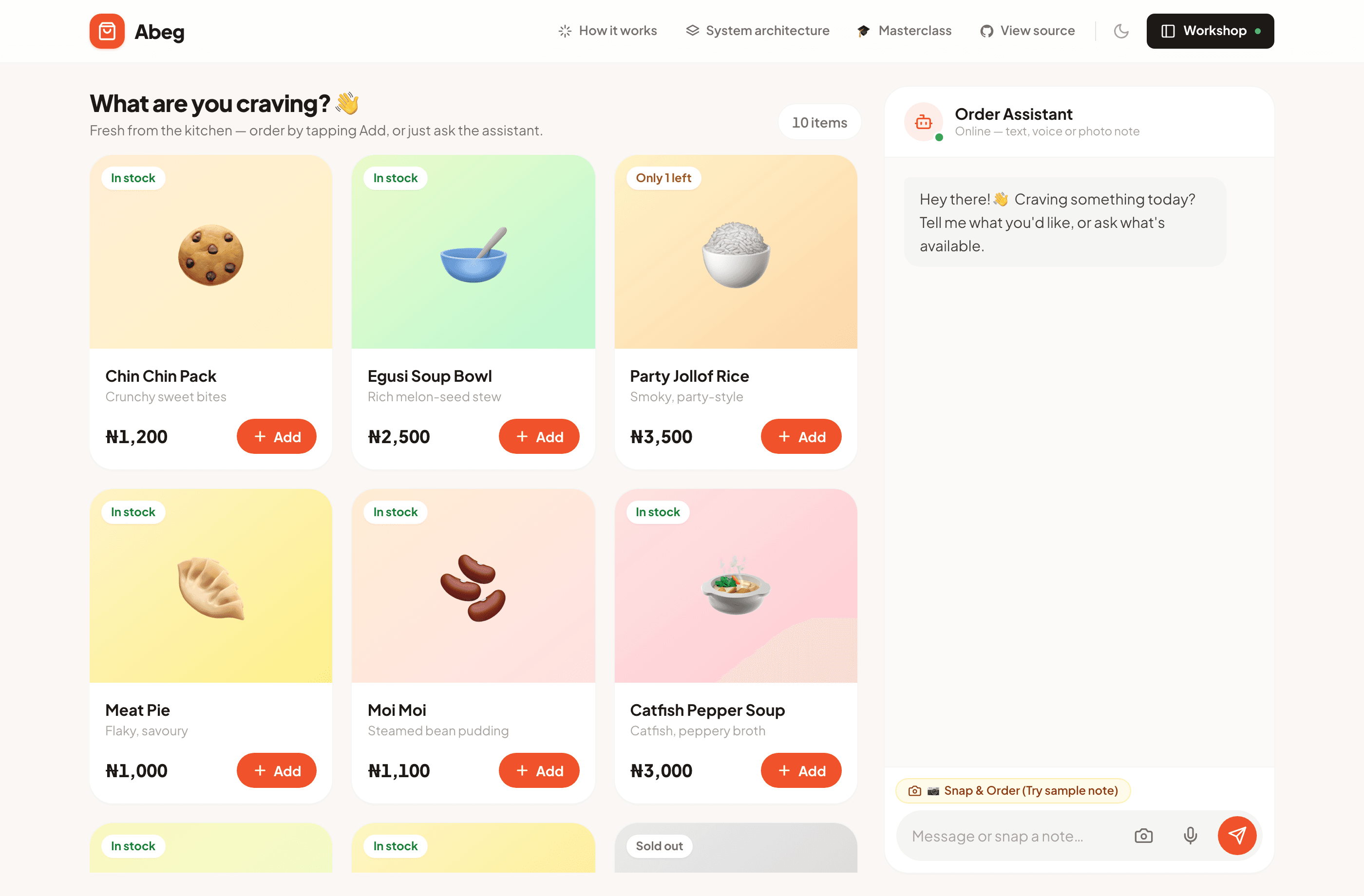
It answers only from a real database of menus, prices and stock.
Switch it off and it starts inventing prices.
It refuses anything that is not food ordering.
Switch it off and it gets talked into writing code.
David Mgbede, an engineer I had never worked with, forked Abeg and added Snap and Order. Photograph a handwritten list or a screenshot, and Abeg reads it and places the order. His change adds image input, client-side compression, and automatic routing to a vision model, with a new test and all 32 passing. I merged it on 14 September. His post about it reached 281 reactions.
See the contributionI did not want slides about AI engineering, I wanted to show the thing itself. Remember the viral clip of a fast-food AI writing Python homework instead of taking orders? Staged screenshot, real problem: models drift off task and make things up. Abeg makes that failure visible on demand, which is the entire lesson. A Workshop panel changes the model, temperature and system prompt, and an X-ray shows token cost and latency per turn.
That is the whole message of the masterclass in one example. Build something real, put it out in public, and see who shows up.
In their words
What attendees said, unprompted.
I came in ready to learn. I left ready to build.
One concept that stood out was the three layers of the intelligence era. It made me reflect on where I am, and where I want to grow.
I had viewed ML Engineers and AI Engineers as almost the same role. Understanding the distinction gave me a much clearer sense of where I stand.
One takeaway I am carrying forward: pick your rung and start the one above it.
It was not just about what to learn. It was about what to do with what you learn.
A great opportunity to learn, connect, and see practical ways we can use AI. Thank you for pouring into us.
Your webinar yesterday was enlightening, and your story was truly inspiring.
I write in Go, and it strengthened my existing knowledge.
I am about to get the starter kit, and I was not expecting the price. The value is gold.
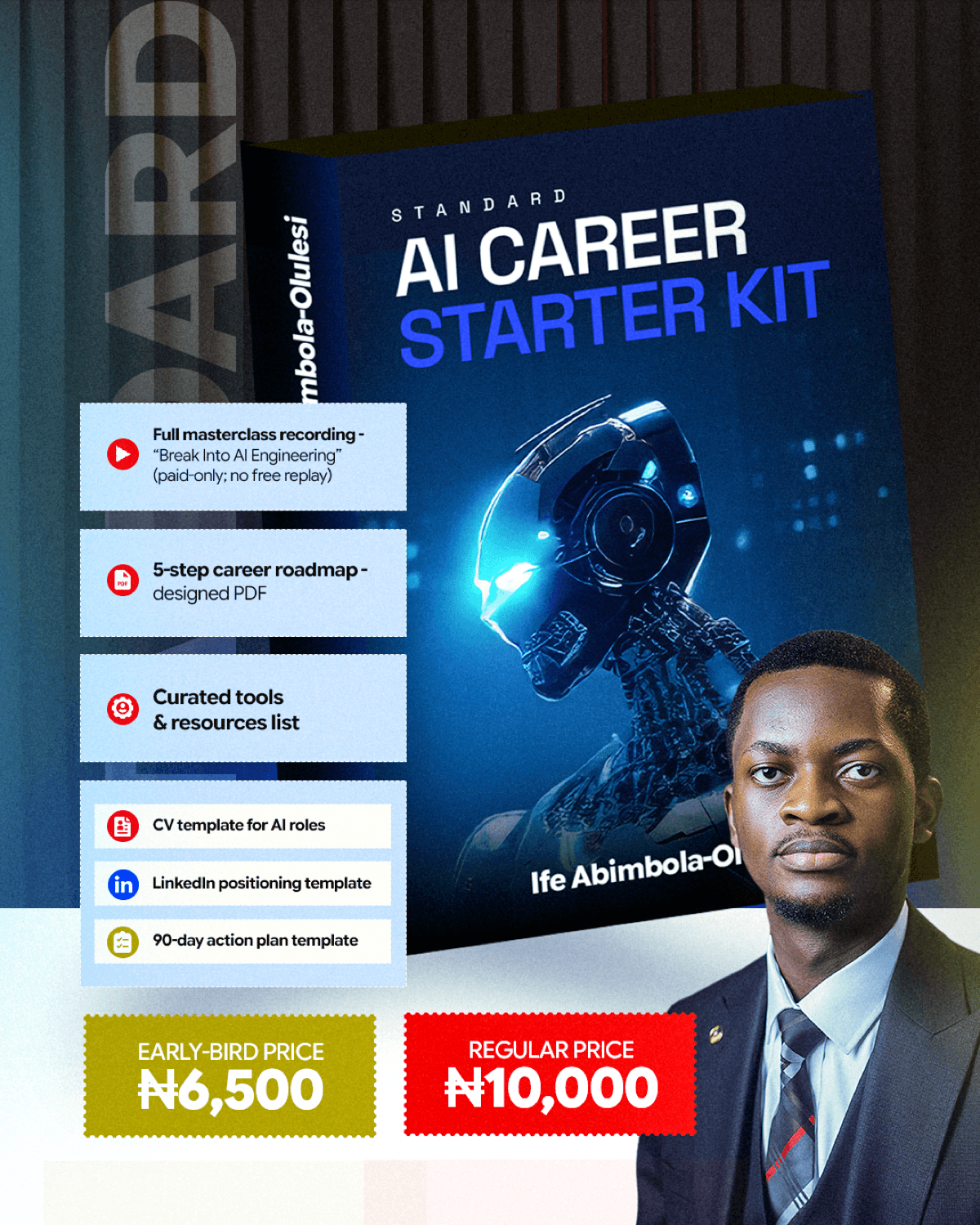
The Starter Kit
Everything I taught, packaged so no one has to DM me for links.
The full toolkit behind the roadmap, built for the person who has already touched code or AI tools and now wants a real path in. Not a course to sit through. A map, a plan, and the exact resources I would have sent you one DM at a time.
- Start Here, how to work through the kit
- The AI Engineering Roadmap, the full path, stage by stage
- The 90-Day Action Plan, what to do, week by week
- 90-Day Tracker, a spreadsheet to track progress
- Resources, Tools and Projects, the curated list
- LinkedIn Positioning Template
- All three slide decks
- The full session recording
What's next
Edition 2, and beyond the screen.
The room did not close. 845 people are in the WhatsApp community, we hold the full mailing list, 20 people applied in three days to help run it, and Abeg is now open source with outside contributors.
Start referrals on day one
Ten days of referrals produced ten percent of sign-ups. Six weeks would change the size of the room.
Measure real attendance
Tracked join links, so the next report carries a true show-up rate.
Follow up on what people build
A 30-day check-in is the only outcome metric that matters. Abeg's first outside contribution is the kind of result we want to count.
Reach beyond Nigeria on purpose
Ninety-four percent joined from Nigeria. Next edition adds time-zone-friendly promotion for Ghana, East Africa and the diaspora.
Leave the screen
The long-term plan is a city-to-city tour: masterclasses in rooms, not only on streams.
Thank you
The people behind the room.
This did not happen alone. Thank you to Dorcas Nwaeke, who moderated the live session. To Gift, for email, community copy and the referral mechanics. To the design team, for the flyers, countdowns and certificates. To the data team, for the registration analysis. To Winumu, our event partner. And to the 23 ambassadors, and everyone who reshared, prayed and showed up.
It started with one DM I could not answer. It became a room of 2,013. A little one shall become a thousand.
Methodology
How these numbers were produced.